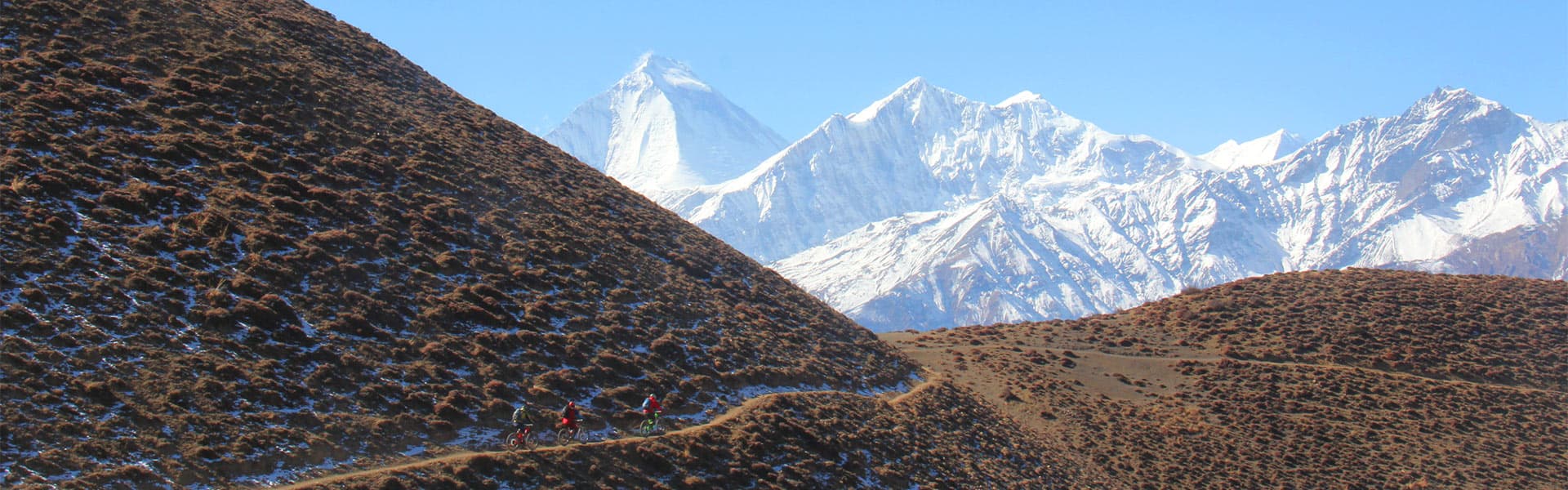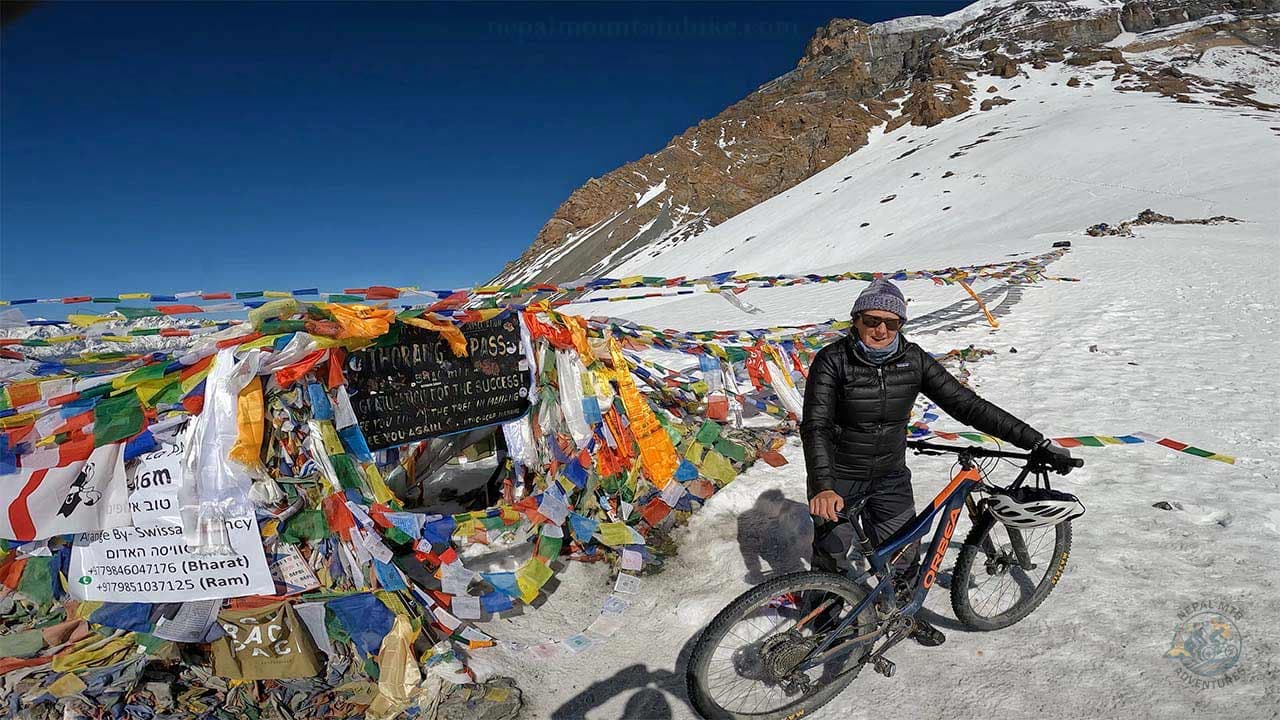
Lower Mustang is the Himalaya you can ride without asking permission. No restricted-area permit, no minimum group size, and a rain shadow that keeps the trails dry when the rest of Nepal is unrideable.
This 11-day Lower Mustang mountain bike tour takes you from Kathmandu to the high desert at Muktinath, then turns around and spends four days giving the altitude back. You climb to roughly 3,760 m under your own power, ride the Lupra singletrack down through the oldest Bon village in Nepal, and follow the Kali Gandaki past Marpha, Kalopani and Tatopani into the subtropical valley below.
The numbers are the reason riders come. More than 2,500 m of net descent across the trip, including a single day that drops almost 1,900 m through a valley with the greatest vertical relief of any river valley on earth. You start the week in pine forest above Pokhara at 822 m and finish it having ridden through high desert, Tibetan-influenced villages, apple orchards and river gorge, all on one bike.
It is not a beginner holiday. Expect loose rock, exposed traverses, jeep track, and consecutive days in the saddle at altitude. What you get in return is the most varied riding in Nepal, and the shortest paperwork.
Operated by Nepal MTB Adventures, a Pokhara-based mountain-bike specialist with more than 20 years developing and guiding MTB tours across the Annapurna and Mustang regions.
Lower Mustang MTB Tour at a Glance
Why Ride Lower Mustang by Mountain Bike?
Lower Mustang is one of Nepal's most rewarding regions for riders who want more than a conventional sightseeing journey.
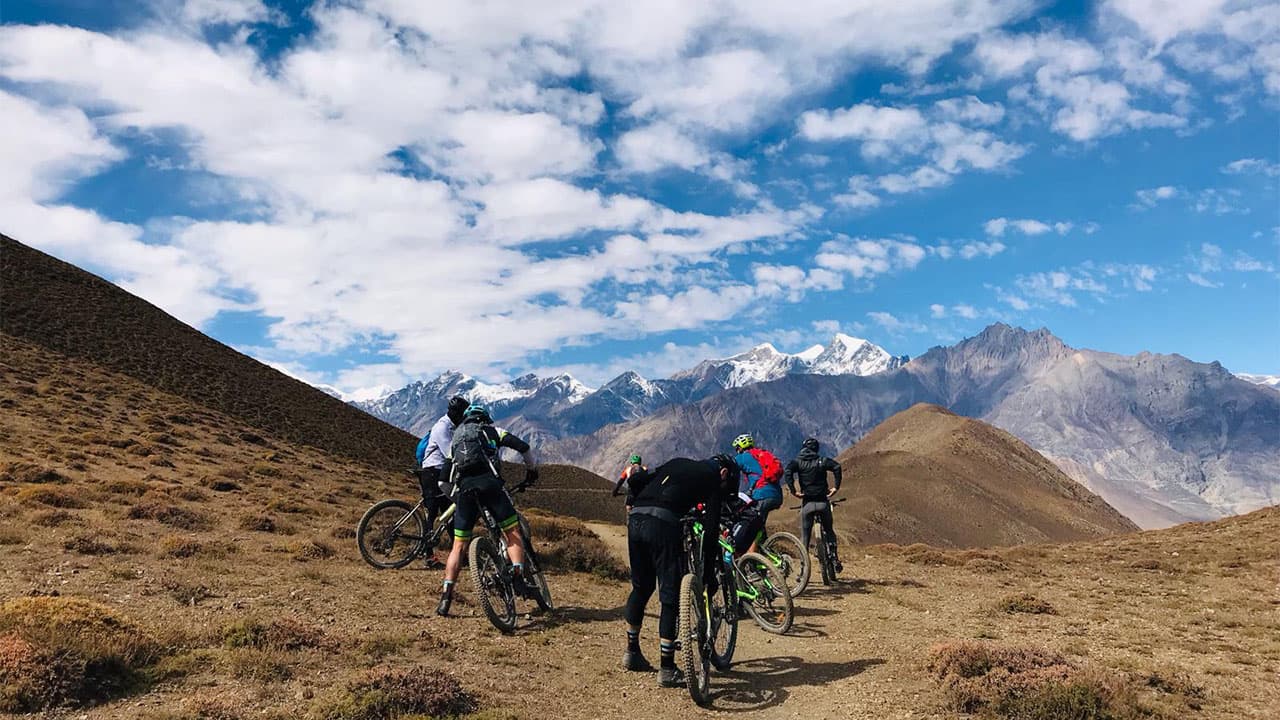
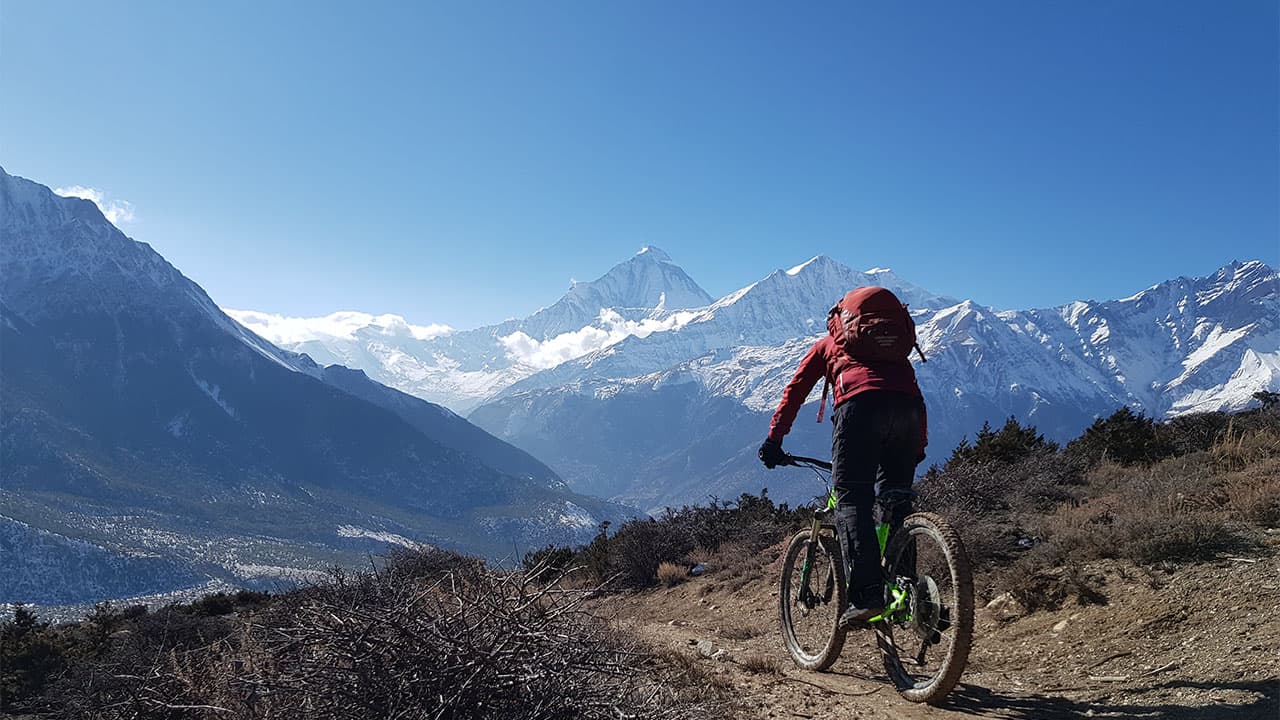
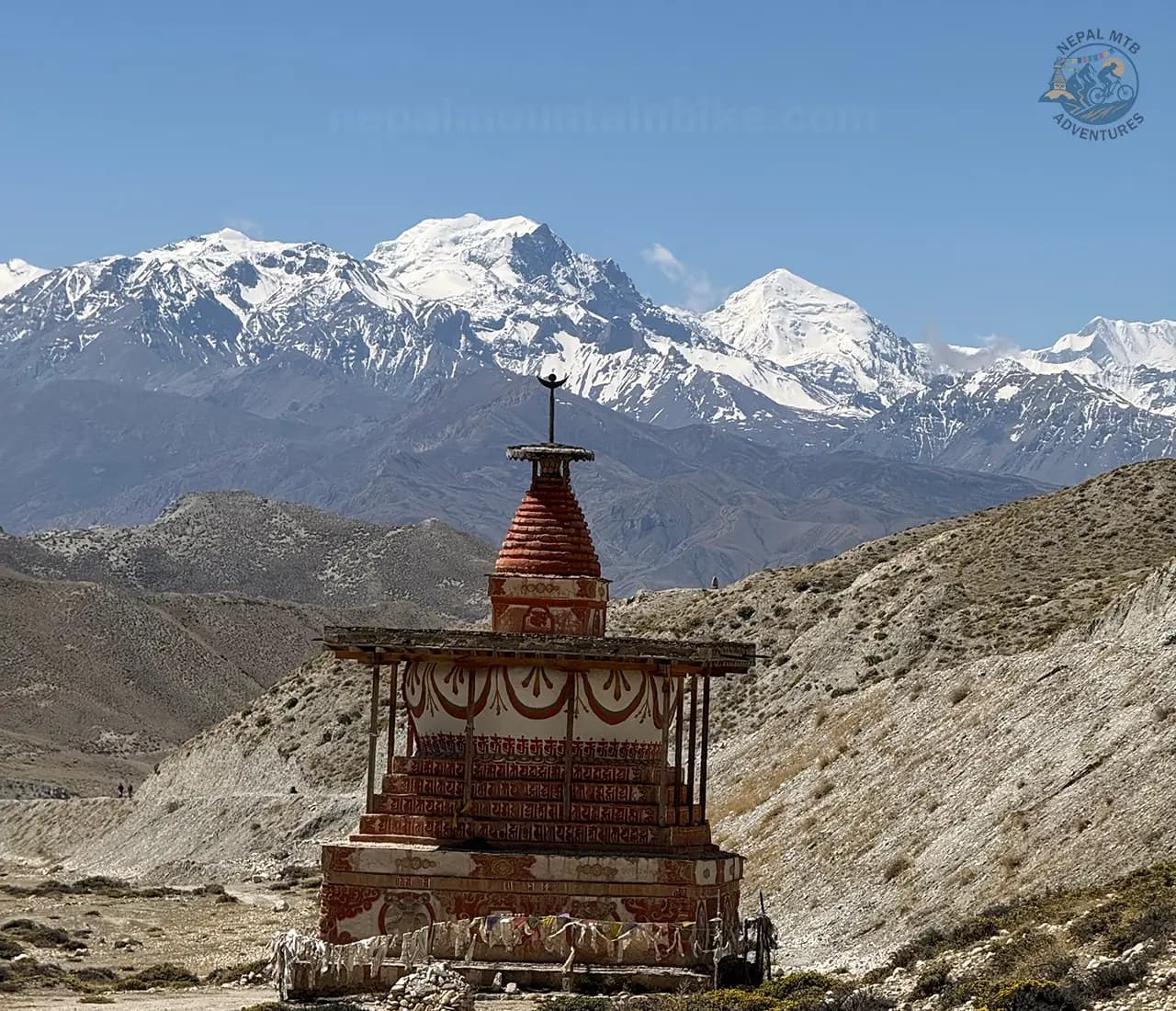
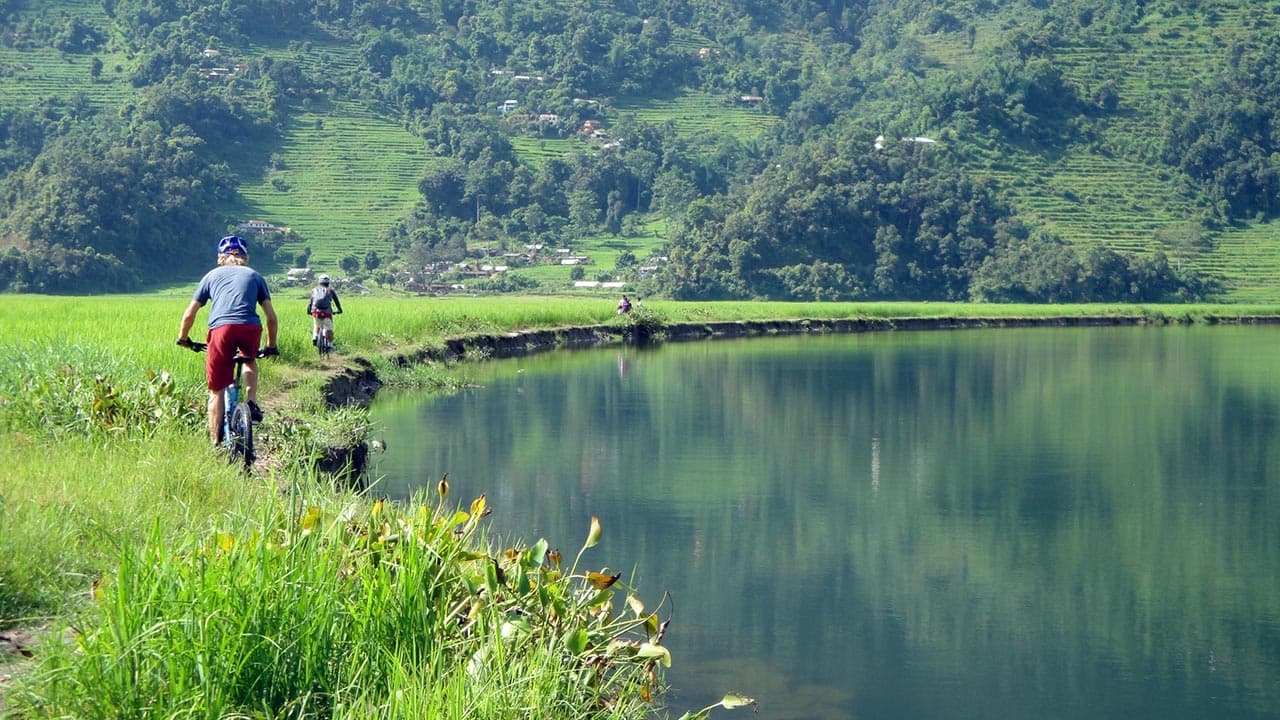
The landscape changes dramatically as you travel north from Pokhara. Green mid-hills and farmland gradually give way to the drier Kali Gandaki valley, high mountain villages, Tibetan-influenced architecture, pine forests, apple orchards, exposed ridgelines, and the distinctive high-desert environment around Muktinath.
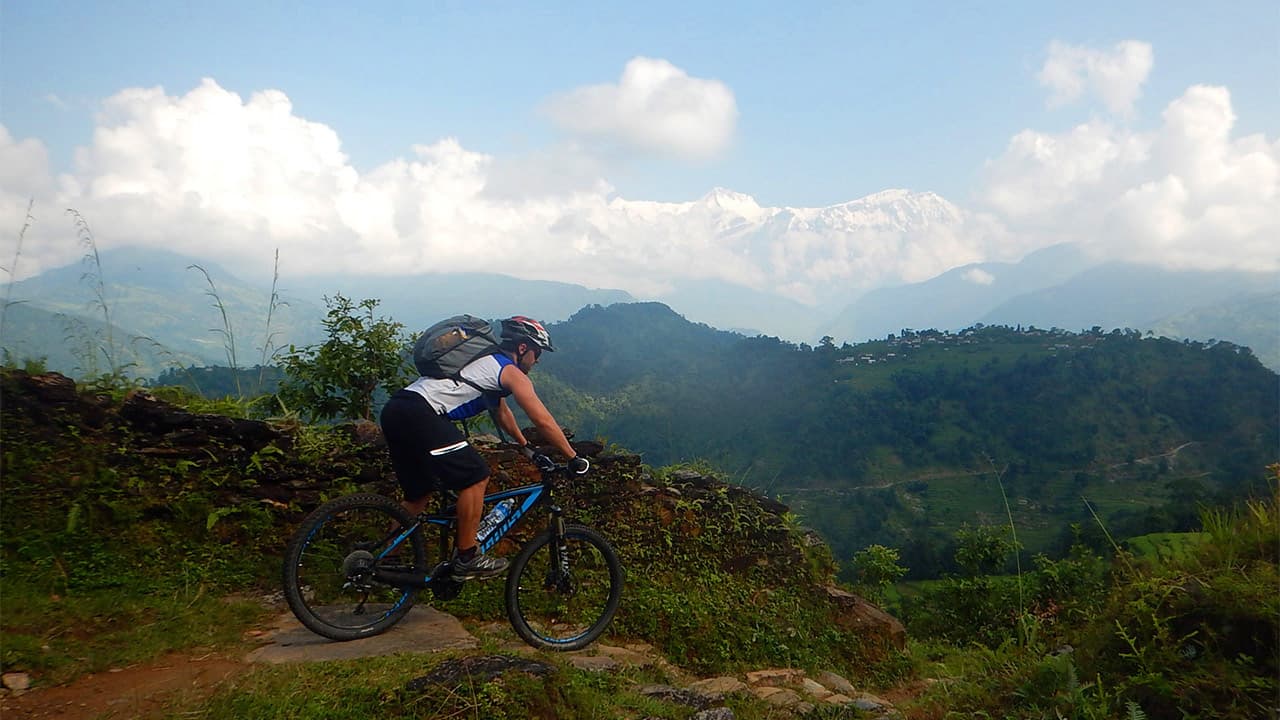
For mountain bikers, the attraction is the variety. A single expedition can include flowing singletrack, rough jeep roads, rocky descents, suspension bridges, river-valley riding, technical sections and long high-altitude descents. The route also passes through villages and cultural sites that are difficult to appreciate from a vehicle, and it appears on most lists of the best Himalayan mountain biking trails in Nepal.
The riding is only part of the experience. The guides bring local knowledge of the trails, villages, weather patterns, riding conditions, and cultural landscape, while the support team provides bike and luggage assistance along the route.
Why Ride With Nepal MTB Adventures?
Nepal MTB Adventures was built around mountain biking rather than adding bicycles to an existing trekking product.
The operation began developing a dedicated MTB business in Pokhara in 2003 and launched in 2004. Since then, the team has developed mountain-bike routes throughout the Annapurna and Mustang regions, and more than twenty years later, we are still riding the same valleys.
The guiding team includes experienced MTB guides, competitive riders, and mechanics who understand what riding in Nepal's varied terrain actually demands.
We also run an in-house workshop and maintain our own MTB and E-MTB fleet, so bike setup, trailside repairs, and mechanical support are handled by people who already know the equipment. On a route where the nearest bike shop can be two days away, that matters.
Our approach is simple. The route is adapted to the riders and to current trail conditions, rather than treated as an itinerary that cannot change.
What Makes This Lower Mustang MTB Route Different?
A proper shakedown ride before the high mountains
Before Mustang, the Pokhara shakedown ride gives your guide a chance to watch how you brake, choose lines, and handle loose surfaces. It is also when we adjust saddle height, controls, and bike setup.
This matters because small setup problems become much more noticeable during long descents and consecutive riding days. The trails around Pokhara give us forest singletrack, real climbs, and flowing descents to test everything on.
Two possible approaches to Muktinath
The Kagbeni to Muktinath section can use different lines, including approaches via Jhong or Jharkot, depending on trail conditions and rider preference. Your guide picks the option that suits the group on the day rather than treating one line as mandatory.
Technical singletrack in the Lupra and Kali Gandaki region
The Lupra section provides the most distinctive singletrack riding on the route, dropping 900 to 1,000 m from the Muktinath plateau into the valley below. Lupra itself is one of the oldest Bon villages in Nepal.
The Kali Gandaki valley combines long descents with dramatic mountain scenery, and the two together are what riders remember from the trip.
A mixture of riding surfaces
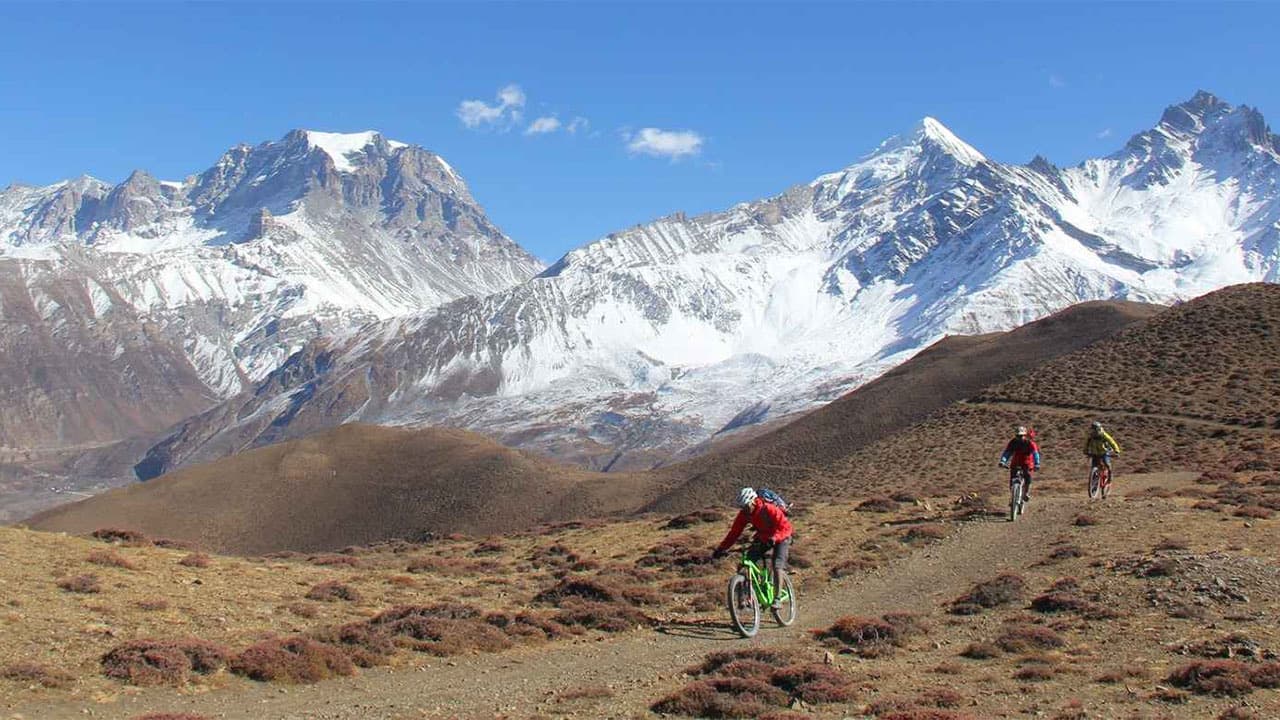
Lower Mustang is not one type of trail. Expect a combination of rocky and loose singletrack, rough jeep tracks, gravel, village roads, river-valley trails, forest riding, paved connections, and steep sustained descents.
Trail conditions change with weather, road construction, erosion, and local use. Our guides ride these trails year-round, which is how the route stays current.
Is the Lower Mustang Mountain Bike Tour Difficult?
Yes. This is a physically demanding MTB itinerary and should not be treated as a beginner tour.
The hardest sections combine altitude, climbing, loose surfaces, and long descents. Some days involve roughly 40 to 50 km of riding and 4 to 6 hours in the saddle.
The maximum riding altitude is around 3,760 m at Muktinath. Fitness alone does not remove altitude risk, so you should be comfortable managing your effort conservatively as you gain height.
If you want to place this against our other trips before you commit, our mountain bike trail grading system for Nepal explains how we rate technical difficulty and what each grade actually feels like on the ground.
Recommended rider profile
This tour suits riders who:
Ride mountain bikes regularly
Can comfortably ride several consecutive days
Are confident on loose gravel and rocky terrain
Can control a mountain bike on sustained descents
Are comfortable on uneven jeep tracks and singletrack
Can manage 4 to 6 hours of riding when required
Understand that walking a short technical section is sometimes the safest option
Are prepared for changing weather and trail conditions
Who should consider another itinerary?
This route may not be right for:
First-time mountain bikers
Riders who normally cycle only on paved roads
Riders without experience on loose or rocky terrain
Riders who have never completed consecutive multi-day MTB rides
Riders uncomfortable with long descents or altitude
If any of that describes you, a guided day ride around Pokhara is a better first Himalayan experience.
If you are unsure about your ability, contact the Nepal MTB Adventures team before booking so the route and bike option can be discussed honestly.
Lower Mustang MTB Terrain and Riding Conditions
The terrain changes significantly throughout the journey.
Pokhara
The pre-Mustang riding is forest singletrack, climbs, viewpoints, and flowing descents at around 822 m. It is used partly to prepare riders and assess bike setup, and it covers the same trails as our Sarangkot ride and Phewa Lake loop.
Kagbeni and Muktinath
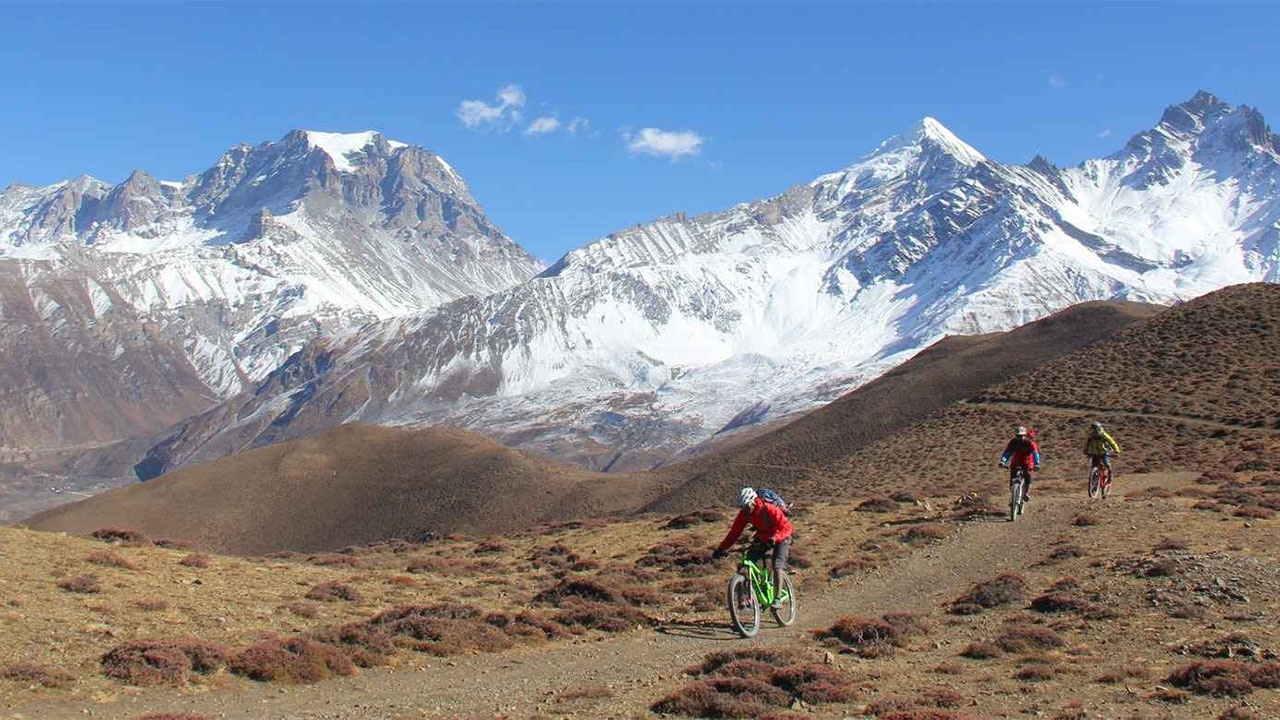
The landscape becomes dry and high. Expect rocky surfaces, exposed sections, sustained climbing, and narrow village trails. Kagbeni is a walled medieval settlement at the confluence of the Kali Gandaki and the Jhong Khola.
Lupra and Jomsom
This section combines singletrack and technical descending with the open terrain of the Kali Gandaki valley. The valley wind builds from late morning and blows up-valley, which is why flights are morning only and why we schedule the riding around it.
Marpha and Kalopani
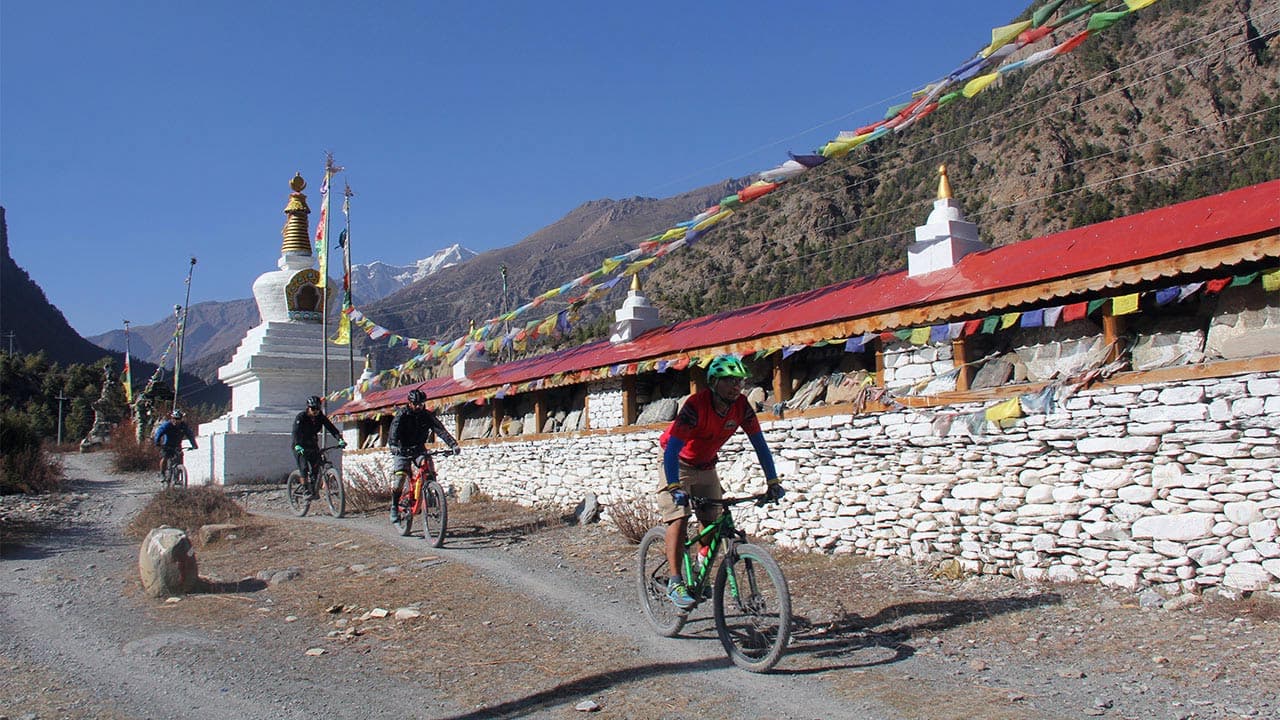
The route becomes greener as it descends, with pine forests, apple orchards, suspension bridges and changing trail surfaces. Marpha is the apple capital of Nepal and a Thakali village of whitewashed stone.
Tatopani and Beni
The lower valley brings warmer temperatures, subtropical vegetation and countryside riding. Tatopani means hot water, and the springs sit on the riverbank.
Recommended Mountain Bike for Lower Mustang
A mountain bike with appropriate gearing, hydraulic disc brakes and reliable tires is important on this route.
Hardtail
A quality hardtail suits riders who are comfortable on rough surfaces and prefer an efficient climbing bike. It is a good choice for the mixed terrain of Lower Mustang, particularly if you have strong technical skills and experience managing rough descents without rear suspension. The Trek Marlin 7 is the hardtail included with the Standard package.
Full suspension
A full-suspension MTB gives more comfort and control on rocky descents, rough jeep tracks and uneven singletrack. It is especially useful if you value descending confidence and fatigue management over bike weight.
It is particularly useful for riders who prioritise descending confidence and fatigue management over minimum bike weight. Our fleet runs the Scott Genius 940 and 950 for this terrain.
E-MTB
An E-MTB helps most on sustained climbs, particularly at altitude, and the Kagbeni to Muktinath day is where riders notice the difference.
It does not remove the technical demands of the trail. You still need mountain-bike handling skills for loose descents, rocks, braking, and changing surfaces. E-MTB availability depends on rider height, bike size, and fleet availability, and we run the Trek Rail 5 on Mustang departures. If electric assist is your general preference, we also run dedicated E-MTB tours in Nepal.
Bike Options and Upgrades
Bring your own bike
Save USD 200 on the Standard package or USD 250 on the Premium package. Your own bike should be suitable for the terrain and fully serviced before you arrive.
Full-suspension MTB upgrade
Upgrade to a full-suspension mountain bike on the Standard package for USD 250 for the expedition. Full suspension is already included on the Premium package.
E-MTB upgrade
Upgrade to an E-MTB on either package for USD 350 for the expedition.
Single room supplement
A private-room supplement is available for USD 450, subject to availability. Private rooms are straightforward to arrange in Kathmandu and Pokhara and more limited in the remote mountain villages.
You can see the full specifications of every bike we run in our rental fleet.
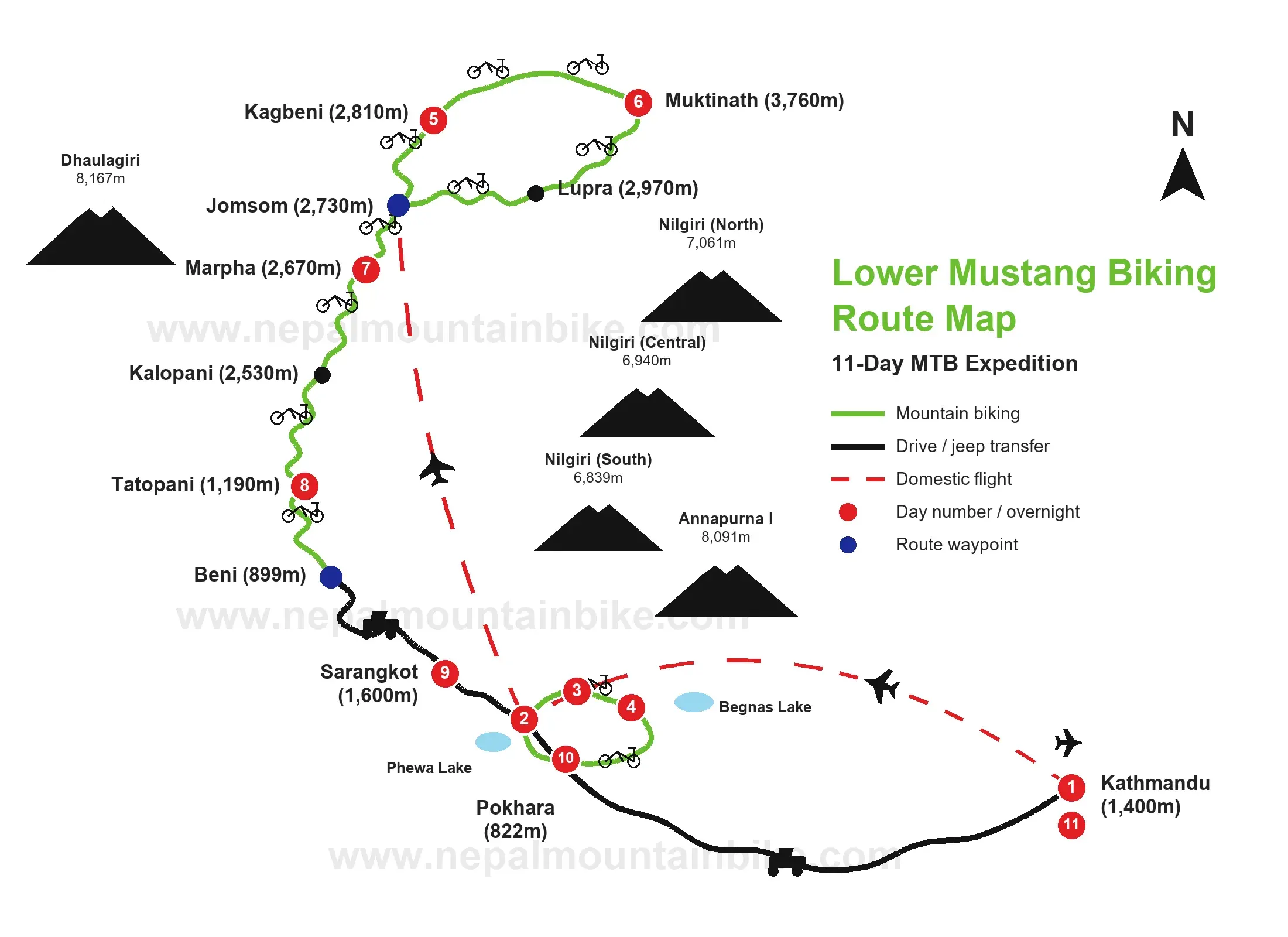
Route Map
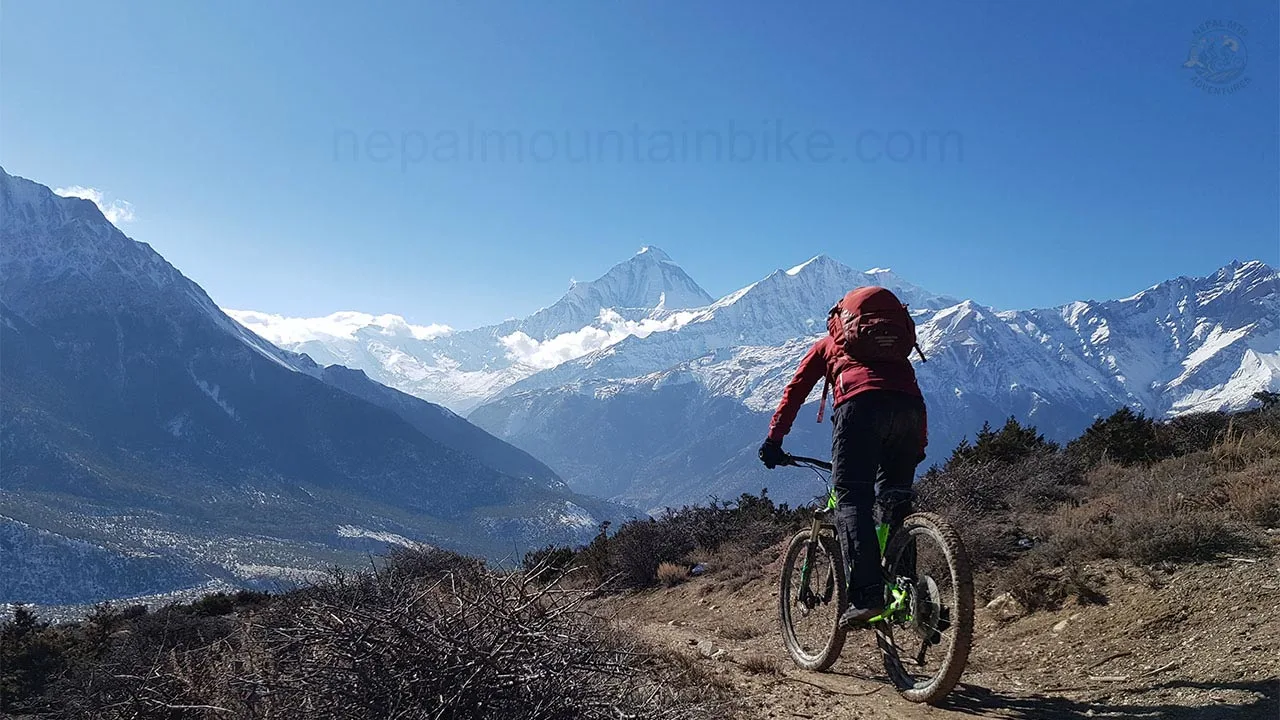
The Lower Mustang mountain biking route follows the Kali Gandaki corridor, starting from Jomsom and passing through Kagbeni, Marpha, and Tatopani. Guided by Nepal Mountain Bike experts, you’ll follow safe routes designed for adventure while maximizing cultural encounters.
Book Now for An Adventure of Lifetime!